What Is a Chuck? Types, Functions, Selection and Maintenance Guide
In lathes, machining centers, grinding machines, and automated production lines, the chuck is an essential core component. Its primary function is to securely and accurately hold the workpiece in place on the machine spindle or machining position, allowing cutting, drilling, boring, tapping, and grinding operations to be performed safely and stably.
Many people simply view a chuck as a tool for holding a workpiece. In reality, however, it has a major impact on machining quality. Workpiece positioning accuracy, vibration control, repeatability, and even overall production efficiency are all closely related to the chuck’s design, rigidity, clamping force, and operating method.
In other words, even the most advanced machine tools and cutting tools cannot achieve their full potential without a stable and reliable workholding system.
1. Basic Functions of a Chuck
Chuck's function as such below:
1. Securely Holding the Workpiece
The most fundamental function of a chuck is to firmly secure the workpiece and prevent slipping, shifting, or flying out during machining due to cutting resistance, centrifugal force, or vibration.
2. Accurate Centering
In turning applications, the workpiece must remain concentric with the spindle center. A chuck with excellent repeatability helps improve machining consistency and roundness accuracy.
3. Reducing Machining Vibration
Insufficient clamping force can lead to vibration, chatter marks, unstable dimensions, and poor surface finish. High-rigidity chucks help improve machining stability.
4. Improving Productivity
In mass production environments, chucks are not only precision tools but also efficiency tools. Features such as quick jaw change systems, stable clamping, automatic opening/closing, and robotic integration help reduce setup and loading times.
2. What Is Clamping and Why Is It Important?
The process of securing a workpiece in a chuck is called clamping. Stable machining performance depends heavily on proper clamping conditions. Even with advanced machines and tooling, poor clamping can still negatively affect machining results.
Effective clamping requires consideration of multiple factors, including:
- Workpiece material
- Workpiece diameter and length
- Thin-wall structure
- Irregular shapes
- Machining load
- Dimensional tolerance requirements
- Geometric accuracy requirements such as concentricity, roundness, flatness, and perpendicularity
For example, excessive clamping force may deform thin-wall workpieces before machining even begins, while insufficient force may cause slipping during cutting. Therefore, chuck selection should be based on the entire machining condition rather than size alone.
3. Chuck Jaws: Key Components Affecting Accuracy
Chuck bodies are typically used together with jaws. Since the jaws directly contact the workpiece, they play a critical role in clamping stability, repeatability, and surface protection.
1. Hard Jaws
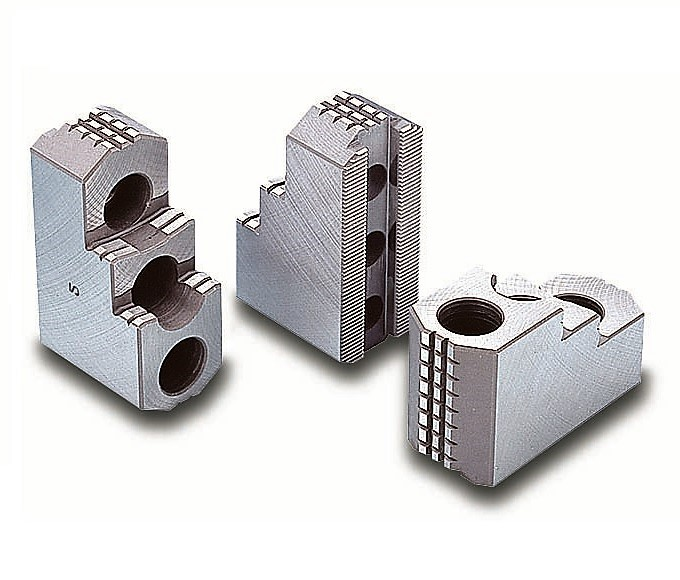
Hard jaws are heat-treated for high hardness and wear resistance. They are suitable for below:
- rough machining
- Black scale materials
- mass production
- applications requiring high clamping force.
Hard jaws offer excellent durability, high rigidity, and long service life. However, their contact adaptability to different workpiece shapes is relatively limited. When workpiece diameters or shapes vary significantly, alternative clamping methods may be required.
2. Soft Jaws
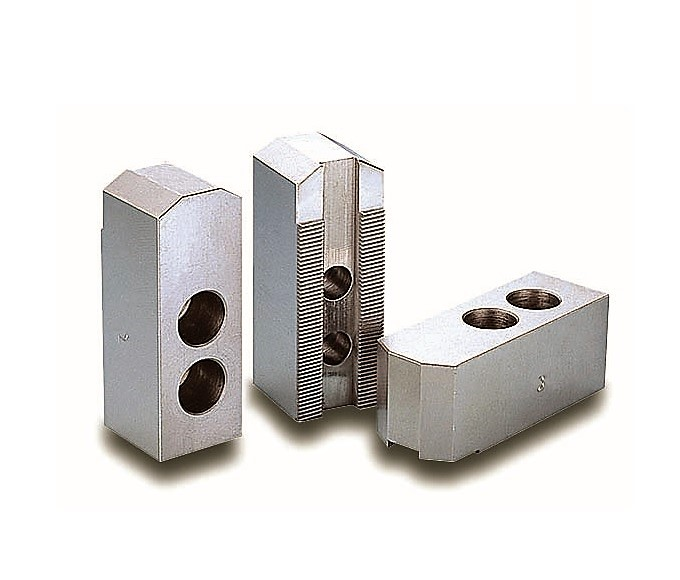
Soft jaws can be machined to match the workpiece profile, making them ideal for below:
- precision machining, Second-operation machining.
- thin-wall workpieces.
- pecial-shaped parts.
- suitable for workpieces requiring high repeatability and positioning accuracy.
Soft jaws provide better contact surfaces, improve clamping uniformity, reduce deformation and runout, and can also be made from materials such as aluminum or engineering plastics to help protect delicate workpiece surfaces.
4.Common Types of Chucks
Different machining requirements call for different types of chucks. Below are some of the most common chuck types and their typical applications.
1.Three-Jaw Manual Chuck
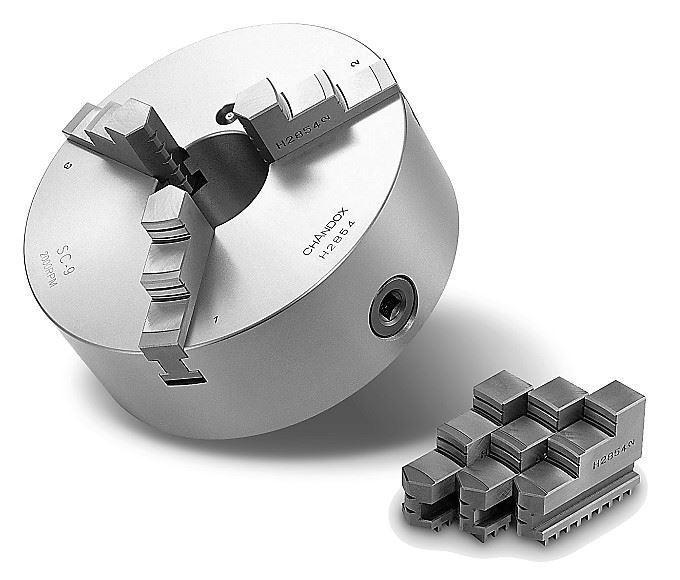
The three-jaw chuck is one of the most common chuck types. Its synchronized jaws allow quick centering of round workpieces.
Features:
- Easy operation
- Fast centering
- Suitable for round workpieces
- Commonly used in conventional lathes and general machining applications.
Suitable Applications:
- Single-piece machining
- Small-batch production
- Repair and maintenance machining
- Educational and general turning applications
2. Four-Jaw Independent Chuck
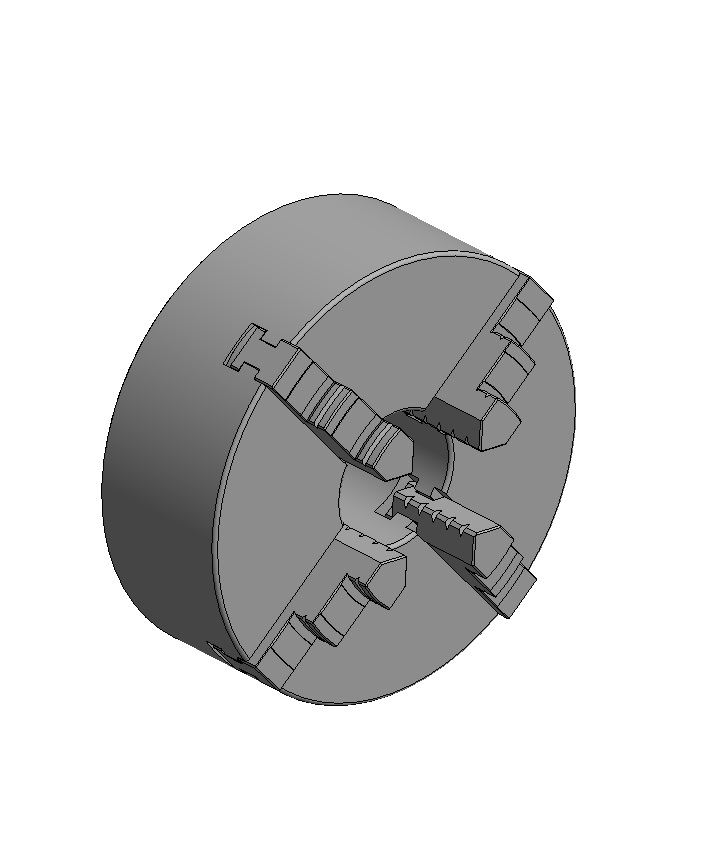
Each jaw can be adjusted independently, making it suitable for square, rectangular, eccentric, or irregular workpieces.
Features:
- Capable of clamping irregular-shaped workpieces
- Allows eccentric adjustment
- Suitable for highly flexible machining applications
- Requires more manual adjustment for centering
Suitable Applications:
- Square workpiece machining
- Eccentric workpieces
- Special components
- Non-standard shaped workpieces
3. Hydraulic Chuck
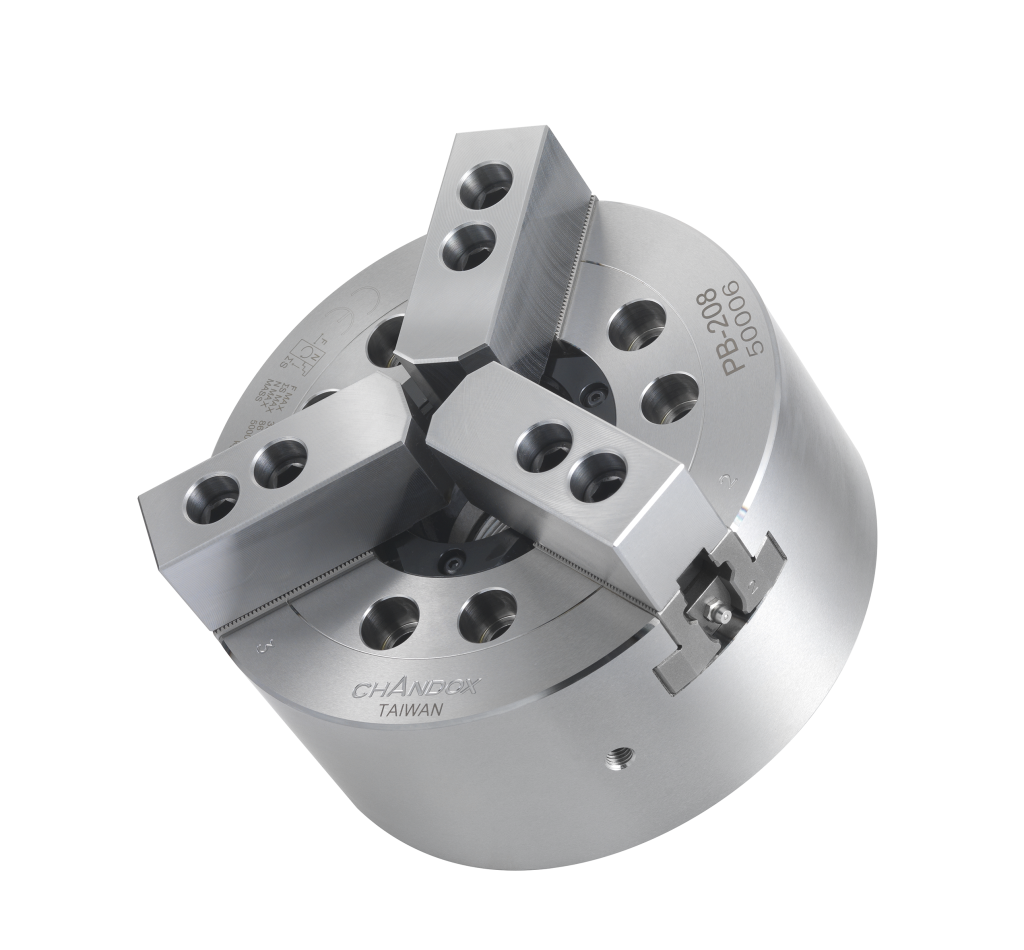
Hydraulic chucks are driven by hydraulic cylinders and are widely used in CNC lathes and automated machining systems. hydraulic power chucks utilize the output force of a hydraulic rotary cylinder to provide full clamping force to the chuck. This not only reduces operator fatigue, but also helps achieve automated production.
Features:
- Stable clamping force
- Ideal for automation
- Consistent cycle times
- Suitable for mass production
Suitable Applications:
- CNC lathes
- Automatic loading and unloading systems
- Mass production
- High-efficiency machining lines
4. Pneumatic Chuck
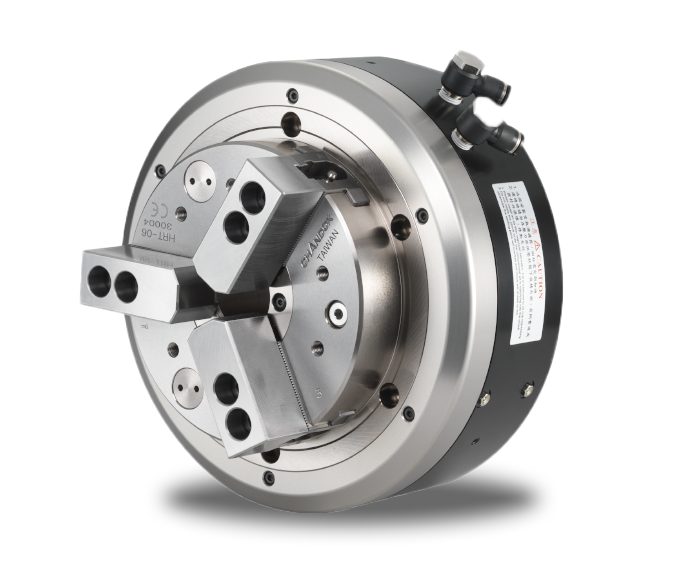
Pneumatic chucks use compressed air as their power source, which requires careful management of the air supply system. Since compressed air can generate moisture (H₂O), improper air treatment may cause internal rusting or abnormal wear inside the pneumatic rotary cylinder. In most factories, air compressors typically provide pressure below 8 kg/cm², making it more difficult for pneumatic chucks to achieve high clamping force in heavy-duty cutting applications. Compared with hydraulic systems, pneumatic chucks generally provide gentler clamping force, making them suitable for thin-wall, easily deformable workpieces, or light cutting applications.
Features:
- Relatively simple structure
- Fast response speed
- Suitable for light-duty machining
- Helps reduce deformation of thin-wall workpieces
Suitable Applications:
- Thin-wall workpieces
- Light cutting applications
- Automated equipment
- Machining environments requiring cleanliness
5. Collet Chuck
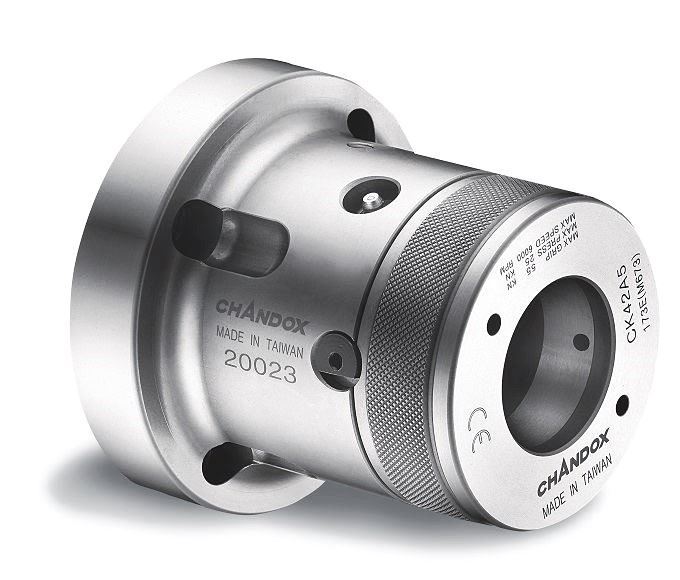
Collet chucks provide a large contact area around the workpiece, offering uniform clamping and excellent concentricity for precision machining.
Features:
- Uniform clamping force distribution
- Low runout
- Suitable for high-speed machining
- Ideal for bar stock and precision components
Suitable Applications::
- Small precision components
- Bar stock machining
- Turn-mill machining applications
- Machining requiring high concentricity
- Automated bar feeding for mass production
6. Indexing Chuck
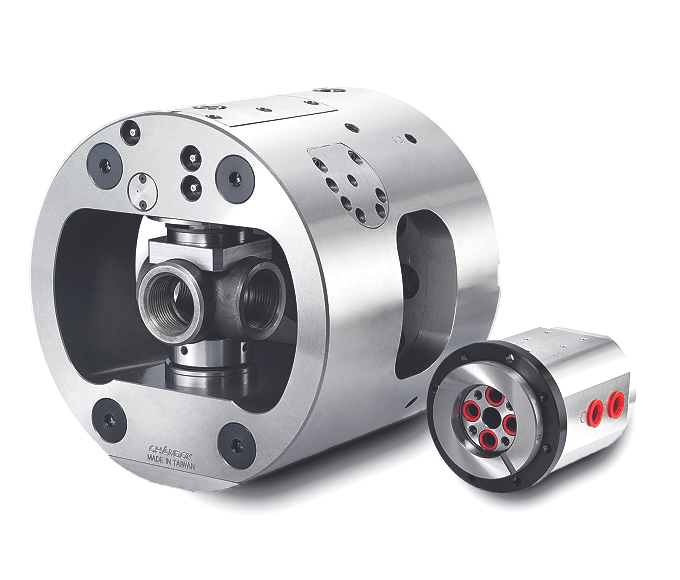
Indexing chucks allow angular positioning for multi-face or angle machining applications.
Features:
- Enables angular positioning
- Suitable for multi-face machining
- Improves machining integration
- Reduces repeated setup errors
Suitable Applications::
- Multi-face components such as pipeline valves
- Combined drilling and milling applications
- Workpieces requiring angular positioning
7.Super Precision Chuck
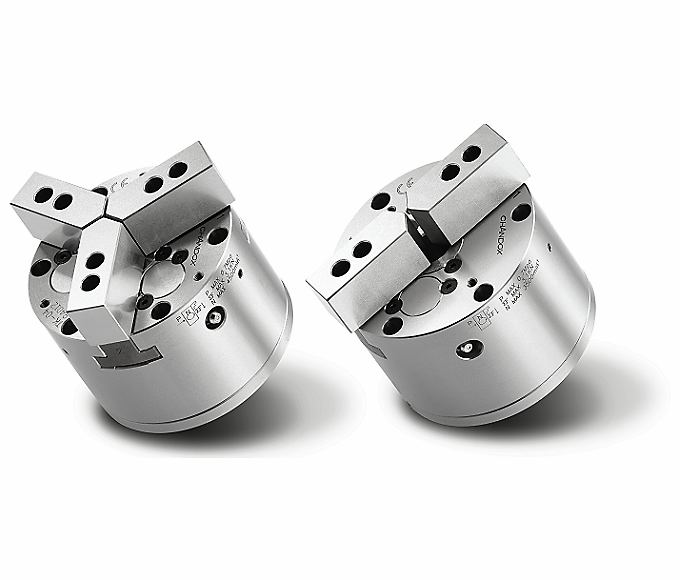
Super precision chucks are specifically designed for high-precision machining applications, with a strong focus on minimizing workpiece runout and improving repeatability to achieve exceptional machining accuracy.
Features:
- High repeatability accuracy
- Low runout
- Suitable for precision components
- Helps improve surface finish quality
Suitable Applications :
- Precision mechanical components
- Medical components
- Electronic components
- Advanced turning applications
Classification by Number of Jaws:
5.Classification by Number of Jaws: How to Choose Between 2-Jaw, 3-Jaw, and 4-Jaw Chucks?
1. Two-Jaw Chuck
Two-jaw chucks are commonly used for irregular-shaped workpieces, square parts, or applications requiring custom fixtures. Their main advantage is flexible clamping space, though they often require customized jaws.
2.Three-Jaw Chuck
Three-jaw chucks are ideal for round workpieces and provide fast, self-centering capability, making them the most common choice for lathe machining.
3. Four-Jaw Chuck
Four-jaw chucks are suitable for square, eccentric, or large workpieces. Independent four-jaw chucks allow each jaw to be adjusted separately, making them highly versatile for complex workpiece shapes.
6. How to Choose the Right Chuck?
When selecting a chuck, it is important to evaluate the entire machining condition instead of focusing only on size or price.
1. Workpiece shape
Round workpieces are typically best suited for three-jaw chucks or collet chucks, while square, irregular-shaped, or eccentric workpieces may require four-jaw chucks, two-jaw chucks, or customized clamping solutions.
2. Workpiece size and weight
The workpiece diameter, length, and weight all affect the required chuck size and clamping force. A chuck that is too small may lack sufficient rigidity, while an oversized chuck may increase spindle load.
3. Machining process
Rough machining requires higher rigidity and stronger clamping force, while finish machining places greater emphasis on runout control, repeatability, and minimizing workpiece deformation.
4. Accuracy requirements
If the application requires high concentricity, roundness, or repeatability accuracy, a precision or ultra-precision chuck should be selected and paired with properly designed jaws for optimal performance.
5. Automation needs
If the production line requires robotic loading and unloading, unmanned operation, or quick changeovers, hydraulic chucks, pneumatic chucks, or quick-change clamping systems are often the most suitable solutions.
6. Maintenance convenience
After long-term use, factors such as internal sliding mechanisms, lubrication condition, and jaw wear can all affect chuck performance. Therefore, ease of maintenance is also an important consideration when selecting a chuck.
7. Common Components Related to Chuck Installation
To install the chuck on the machine correctly, attention must be paid to the following parts:
1. Chuck body
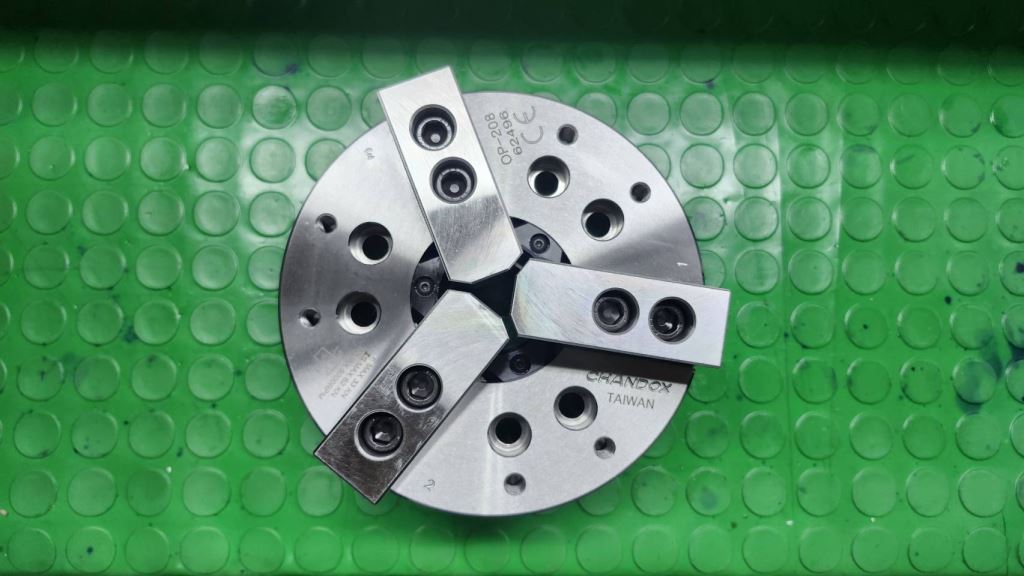
The main component responsible for holding the workpiece and serving as the core of the entire clamping system.
2. Flange or Adapter Plate
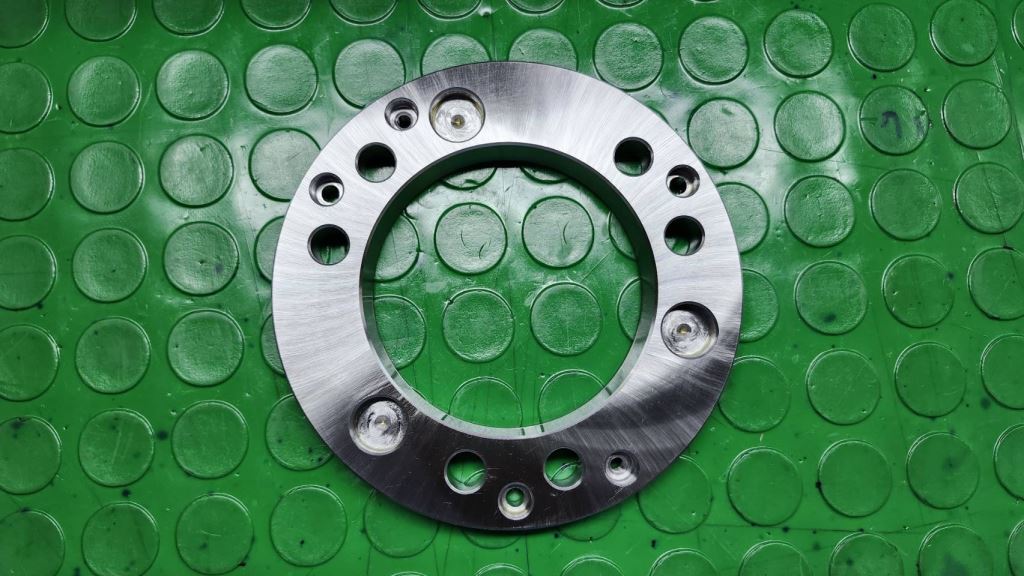
Used to connect the chuck to the machine spindle. Different spindle specifications require matching back plates or flanges.
3. Rotary Cylinder
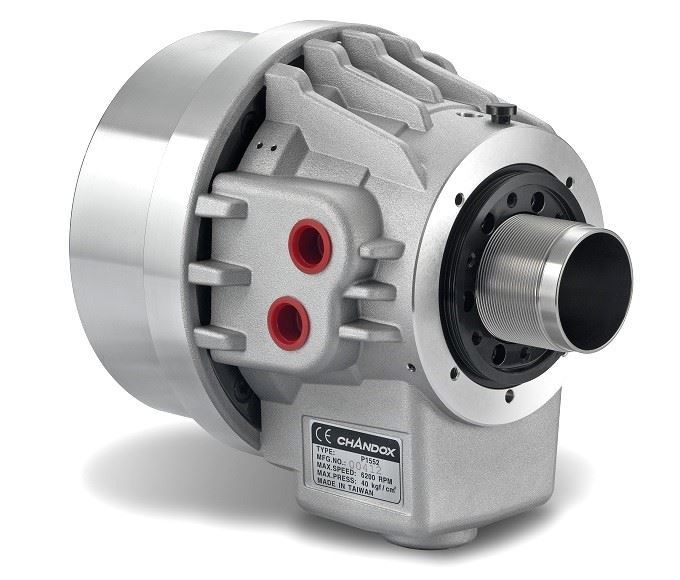
Hydraulic or pneumatic power chucks typically require a rotary cylinder to provide the pushing and pulling force needed for automatic jaw opening and closing.
4. Draw Tube or Connecting Components
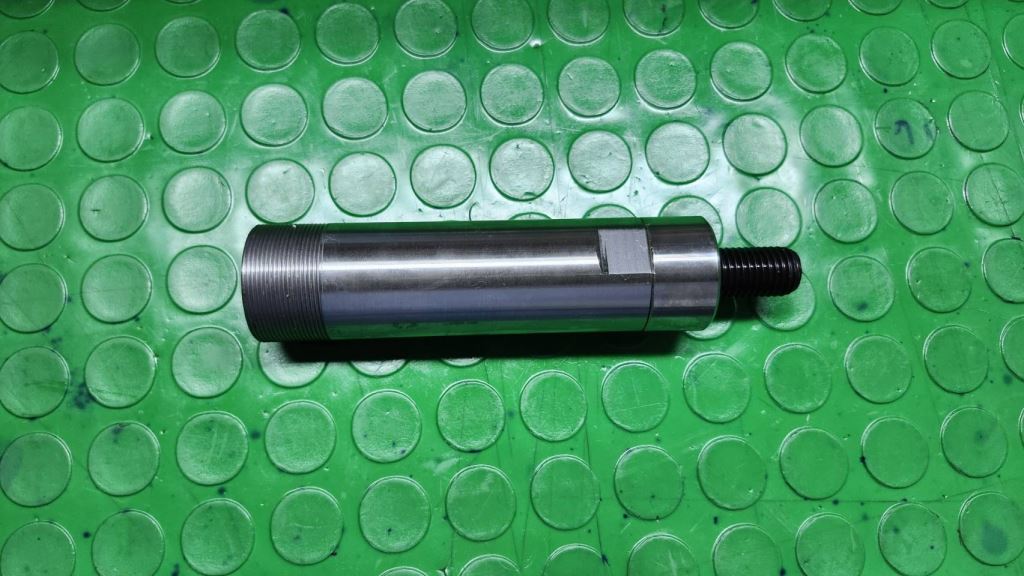
These components transfer motion from the rotary cylinder to the chuck, enabling the jaws to open and close properly.
8. Chuck Maintenance & Care
Because chucks operate under high loads and frequent usage, regular maintenance is essential for maintaining performance and service life.
1. Regular lubrication
The internal sliding components of a chuck require proper lubrication. Insufficient lubrication may lead to reduced clamping force, unstable jaw movement, or increased wear. Regular inspection using a clamping force tester is recommended to help maintain optimal chuck performance.
2. Remove chips and oil contamination
If chips or debris enter the sliding areas inside the chuck, they may affect jaw travel and clamping accuracy. Regular cleaning is therefore essential to maintain stable performance.
3. Check jaw wear regularly
Jaw wear can affect the contact surface and overall clamping stability. If increased workpiece runout or unstable clamping is observed, the condition of the jaws should be inspected promptly.
4. Verify hydraulic or pneumatic pressure settings
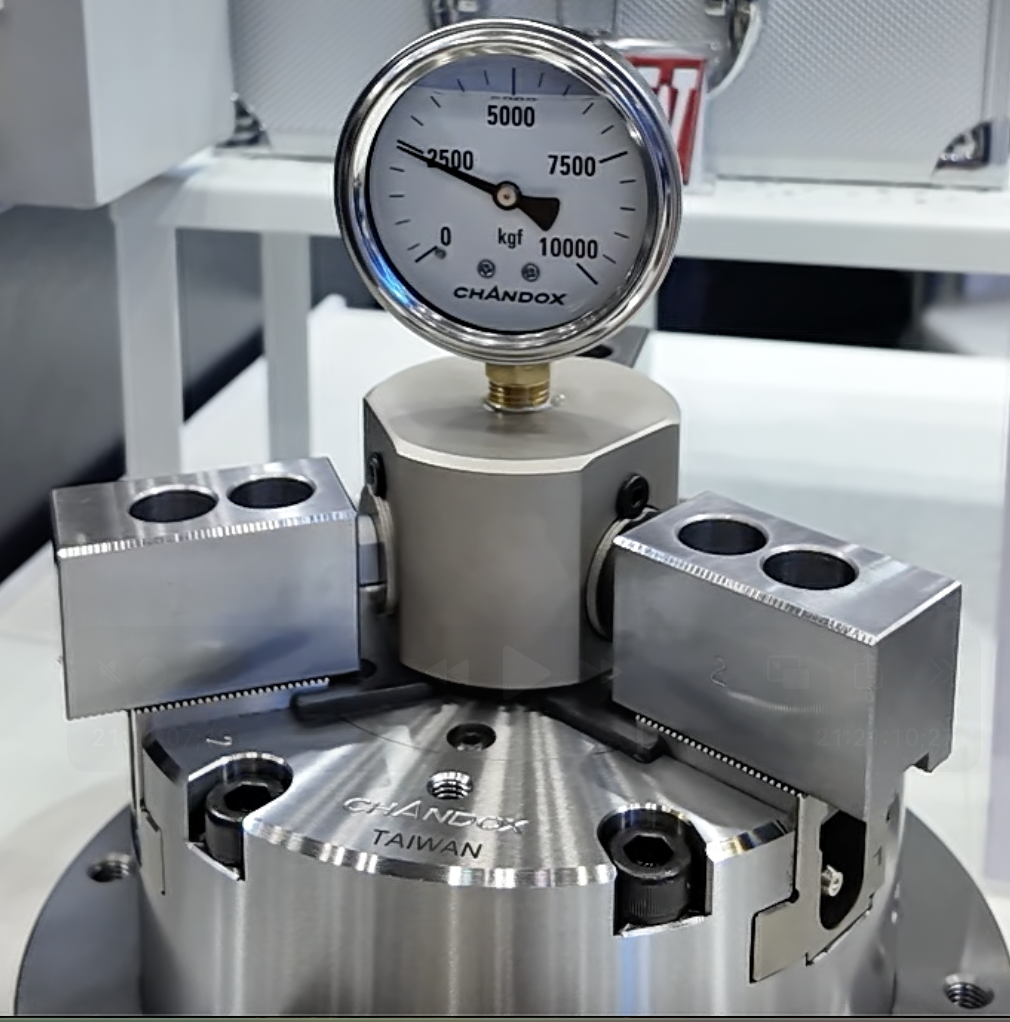
Hydraulic and pneumatic chucks should have their pressure settings checked regularly to ensure they meet machining requirements. Excessive pressure may deform the workpiece, while insufficient pressure can cause slipping during machining.
5. Inspect runout periodically
For precision machining applications, chuck runout directly affects final product quality. It is recommended to regularly inspect the workpiece runout after clamping using a dial indicator to ensure machining accuracy.
9. Future Trends in Chuck Technology
As manufacturing moves toward automation and smart production, chucks are evolving from simple mechanical components into integrated machining solutions.
1. Automated clamping systems
Hydraulic and pneumatic chucks can be integrated with CNC controls, robotic arms, and automatic bar feeders to improve production line efficiency and support automated manufacturing.
2. Quick jaw change systems
Quick-change jaw designs help reduce setup and changeover time, making them especially suitable for high-mix, low-volume production environments.
3. Higher precision requirements
As demand for precision components continues to grow, chucks with low runout and high repeatability are becoming increasingly important in modern machining applications.
4. Customized clamping solutions
When dealing with irregular-shaped workpieces, thin-wall parts, or special materials, standard chucks may not always fully meet machining requirements. As a result, customized clamping solutions have become an increasingly important industry trend.
5. System integration with sensors and machine controls
The integration of chucks, rotary cylinders, draw tubes, jaws, sensing components, and machine control systems will become a key direction for advanced machining production lines in the future.