In CNC turning and lathe machining, workholding stability is often even more critical than the cutting tools themselves. Many operators, when first encountering a lathe, focus solely on clamping the workpiece without fully understanding the mechanics of how the chuck actually operates. This often leads to confusion regarding the fundamental differences between ID Gripping (Inner Diameter) and OD Gripping (Outer Diameter).
The reality is that your choice of gripping method directly impacts workpiece deformation, concentricity, surface finish, and the overall success of the machining process. Selecting the incorrect workholding strategy not only results in sub-par quality but also significantly increases the risk of scrapped parts.
This article will explain the basic operating principles of a chuck, define exactly what ID gripping and OD gripping are, and outline the best scenarios for each. This will help you make faster and more accurate decisions during machining operations.
How Does a Chuck Work?
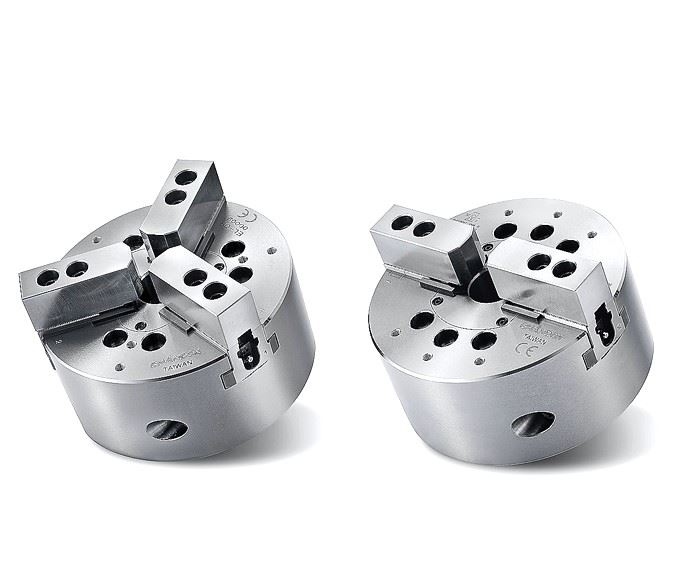 A CNC chuck is a critical workholding device mounted on the lathe spindle. Its primary function is to securely hold the workpiece and maintain stability and concentricity during high-speed rotation and cutting. Depending on the machine configuration, a chuck may be manually operated or driven by hydraulic or pneumatic systems. Through internal wedge or drawbar mechanisms, all jaws are driven to open or close simultaneously.
When the chuck is actuated, the clamping force is applied evenly across all jaws, preventing the workpiece from slipping, wobbling, or developing excessive runout during machining. This synchronized movement is not only about holding the part firmly; it is essential for keeping the workpiece’s center axis aligned with the spindle, which directly affects machining accuracy and surface finish.
Based on the direction in which the jaws apply force, chuck operation can be divided into two main types: OD gripping (outer diameter gripping) and ID gripping (internal diameter gripping). OD gripping clamps the workpiece from the outside inward on its outer diameter, while ID gripping expands outward from an internal bore to hold the part. Each gripping method is suited to different workpiece geometries, machining sequences, and accuracy requirements. The following sections will explain the principles and practical applications of both approaches in more detail.
What Is ID Gripping?
-
Definition
ID gripping refers to a clamping method where the chuck jaws expand outward, exerting force against the internal bore of the workpiece to hold it in place.
Since the force is applied from the inside out, this method is exclusively used for workpieces with a hollow structure or pre-drilled holes. Common applications include pipes, rings, sleeves, bushings, and various other hollow cylindrical components.
-
When to Use ID Gripping
ID gripping is especially useful when the workpiece requires full outer diameter profiling, such as external contours, chamfers, or finish machining of the outer shape. By gripping from the inside out, the jaws are kept away from the tool path, reducing interference and allowing smoother OD turning. This makes it easier to machine complex external geometries.
In addition, ID gripping is commonly used in secondary or later-stage operations. For example, once the internal bore and back face have been machined, switching to ID gripping allows the process to focus on achieving precise outer diameter dimensions and profiles. As long as the internal bore size and roundness are stable, ID gripping can maintain good concentricity while providing excellent access for external machining.
What Is OD Gripping?
-
Definition
OD gripping is a workholding method in which the chuck jaws contract inward to clamp the workpiece by its outer diameter. Once clamped, the workpiece rotates with the spindle during machining, with the clamping force applied directly to the external surface. This is the most common and fundamental starting point for lathe operations.
Because OD gripping is intuitive and quick to set up, it is especially suitable for workpieces with simple shapes and stable outer diameters. It is also frequently used in first-operation machining, serving as a reference for subsequent internal boring or finishing processes.
-
When to Use OD Gripping
OD gripping is ideal when the workpiece requires internal machining operations such as internal turning, drilling, or boring. By clamping on the outer diameter, the internal space remains fully accessible, allowing cutting tools to enter the workpiece smoothly. As long as the outer diameter size and roundness are well controlled, OD gripping provides stable holding and helps establish a reliable internal diameter reference.
OD gripping is also well suited for use with bar feeders or automatic loading systems. In high-volume production or long, continuous machining runs, parts can be loaded and unloaded quickly, reducing changeover time and improving overall machining efficiency. For standardized components, mass production, and automated production lines, OD gripping is an essential workholding method.
Summary Table – ID Gripping vs. OD Gripping
| Comparison Item |
ID Gripping |
OD Gripping |
| Jaw Movement |
Jaws expand outward |
Jaws clamp inward |
| Clamping Location |
Inside the bore |
Outside diameter |
| Required Workpiece |
Hollow parts (tubes, rings, sleeves) |
Solid or hollow parts |
| Best For |
Full external profile machining |
Internal machining operations |
| Tool Access |
Better access to OD |
Better access to ID |
| Typical Operation |
Second operation / finish |
First operation / rough |
| Stage |
machining |
machining |
| Automation Friendly |
Less common |
Highly suitable for bar feeders |
| Common Applications |
Rings, caps, thin-walled parts |
Mass production, bar stock |
Conclusion
Understanding the mechanics of ID gripping and OD gripping is fundamental to achieving consistent machining results. Each method serves a distinct purpose: OD gripping is commonly used for first operations and high-volume production due to its quick setup and broad compatibility, while ID gripping offers greater machining freedom and stability when full access to the outer diameter is required.
In practical machining, knowing when to switch between gripping methods is often more important than simply applying higher clamping force. By understanding how a chuck works and clearly distinguishing the appropriate use cases for ID gripping and OD gripping, you can reduce machining risks and improve overall quality and efficiency. If you are unsure which gripping method to use, feel free to contact us. With years of experience in chuck and workholding solutions, CHANDOX offers a comprehensive product range and custom design expertise to provide gripping recommendations tailored to your machining conditions.